
JCRM , 1(1), 23; doi:10.65381/jcrm.2026.01010023
Case Report
Carotenoderma After Intaking over the Counter Colourless Carotenoid Pills: A Case Report
King Ho Szeto 1,*,
Kar Wai Alvin Lee 2 ,
Kwin Wah Lisa Chan 2
and
Cheuk Hung Lee 2
,
Kwin Wah Lisa Chan 2
and
Cheuk Hung Lee 2
,
Kwin Wah Lisa Chan 2
and
Cheuk Hung Lee 2
1
AttoHealth (Central), Hong Kong
2
Everkeen Medical Centre, Hong Kong
*
Correspondence: alvin429@yahoo.com
Academic Editor:
Siu Chung Patrick Leung
Received: 24 May 2026 / Accepted: 25 May 2026 / Published: 9 June 2026
Abstract
:Background: Carotenoderma is a benign yellow-orange discoloration of the skin caused by carotenoid accumulation within the stratum corneum. It is classically associated with excessive ingestion of carotene-rich foods or supplements and is most prominent on the palms and soles, where the stratum corneum is thickest. Although conventional carotenoids such as beta-carotene and lycopene are well recognized causes, supplement-associated carotenoderma remains underreported, particularly in relation to commercially available “skin brightening” products marketed as containing so-called colorless carotenoids. Case Presentation: We report the case of a 35-year-old woman with no significant past medical history who developed asymptomatic orange-yellow discoloration of both palms and soles after taking an over-the-counter anti-tanning supplement, over the counter colourless carotenoid pills, for one month. She denied excessive intake of carotene-rich foods, carrots, vegetable juices, or additional nutritional supplements apart from occasional melatonin. Examination demonstrated marked orange-yellow pigmentation of the palms and soles with sparing of the sclerae, face, and tendons. She was otherwise systemically well, with no jaundice, pallor, or abdominal findings. The patient also described bilateral eye floaters and dry eyes of one month’s duration after commencing the supplement. Her visual acuity and visual fields were normal at presentation, although retinal examination had not yet been performed. A diagnosis of supplement-associated carotenoderma was made clinically. The supplement was discontinued, liver function tests were arranged, the case was planned for reporting to the Hong Kong Poison Information Centre, and ophthalmology referral was made to exclude retinal toxicity. Conclusions: This case highlights that even products marketed as containing “colorless carotenoids” and promoted as unlikely to cause visible skin pigmentation may still be temporally associated with clinically apparent carotenoderma. It also underlines the importance of careful supplement history taking in patients presenting with yellow-orange discoloration of the skin, as well as the need to distinguish carotenoderma from jaundice and other systemic disorders. Ophthalmic symptoms in the setting of carotenoid-containing cosmetic supplements warrant specialist evaluation, particularly because tanning-related carotenoid agents such as canthaxanthin have been associated with retinopathy. Further pharmacovigilance and case reporting are needed to clarify the safety profile of oral skin-whitening supplements.
Keywords:
carotenoids; dietary supplements; skin pigmentation; retinal diseases; drug-related side effects and adverse reactions; poison control centers1. Introduction
Carotenoderma, also termed carotenaemia when elevated serum carotene is present, is a benign pigmentary condition characterized by yellow-orange discoloration of the skin due to carotenoid deposition within the stratum corneum [1]. The discoloration is classically most evident in areas of thicker keratinization and increased sweating, particularly the palms and soles, but may also involve the forehead, tip of the nose, and nasolabial folds [2]. In contrast to jaundice, the sclerae and mucous membranes are spared, making this a useful clinical discriminator [3]. The condition is usually harmless and reversible, but it may generate significant patient anxiety because of its unusual appearance and potential confusion with hepatic or hematologic disease [4].
Most reported cases of carotenoderma are related to excessive ingestion of beta-carotene-rich foods, including carrots, squash, sweet potatoes, papaya, and mango, or to carotenoid-containing supplements [5]. However, secondary carotenoderma may also occur in the setting of metabolic or systemic disease, including diabetes mellitus, hypothyroidism, liver disease, kidney disease, anorexia nervosa, and disorders of carotene metabolism [6]. For this reason, the diagnosis should not rely solely on pigmentary change, but must be interpreted in the context of dietary history, supplement exposure, systemic review, and targeted investigation where appropriate [7].
In recent years, oral “beauty-from-within” supplements have gained popularity for claims related to skin brightening, photoprotection, and anti-tanning effects [8]. The over the counter colourless carotenoid pills is one such product marketed as containing white or colorless tomato carotenoids, particularly phytoene and phytofluene, and promoted as less likely to discolor the skin than traditional pigmented carotenoids such as beta-carotene or lycopene [9]. Small industry-linked or preliminary studies on phytoene- and phytofluene-rich tomato preparations have suggested photoprotective and cosmetic skin benefits without measurable skin color change under study conditions [10]. Nevertheless, real-world post-marketing adverse events are not well characterized, and the clinical literature describing pigmentary complications from such products remains sparse.
We report a case of clinically apparent carotenoderma developing after one month of over the counter colourless carotenoid pills ingestion in a previously well 35-year-old woman. The case is noteworthy for the paradoxical occurrence of orange-yellow palmoplantar discoloration despite the product’s claim that its colorless carotenoids do not cause visible pigmentation. In addition, the patient reported concurrent eye floaters and dry eyes, raising concern for possible ocular adverse effects and prompting ophthalmic evaluation. This report aims to document the presentation, discuss relevant differential diagnoses, and review the existing literature on diet- and supplement-associated carotenoderma and ocular issues related to carotenoid-based tanning agents.
2. Case Report
2.1. History
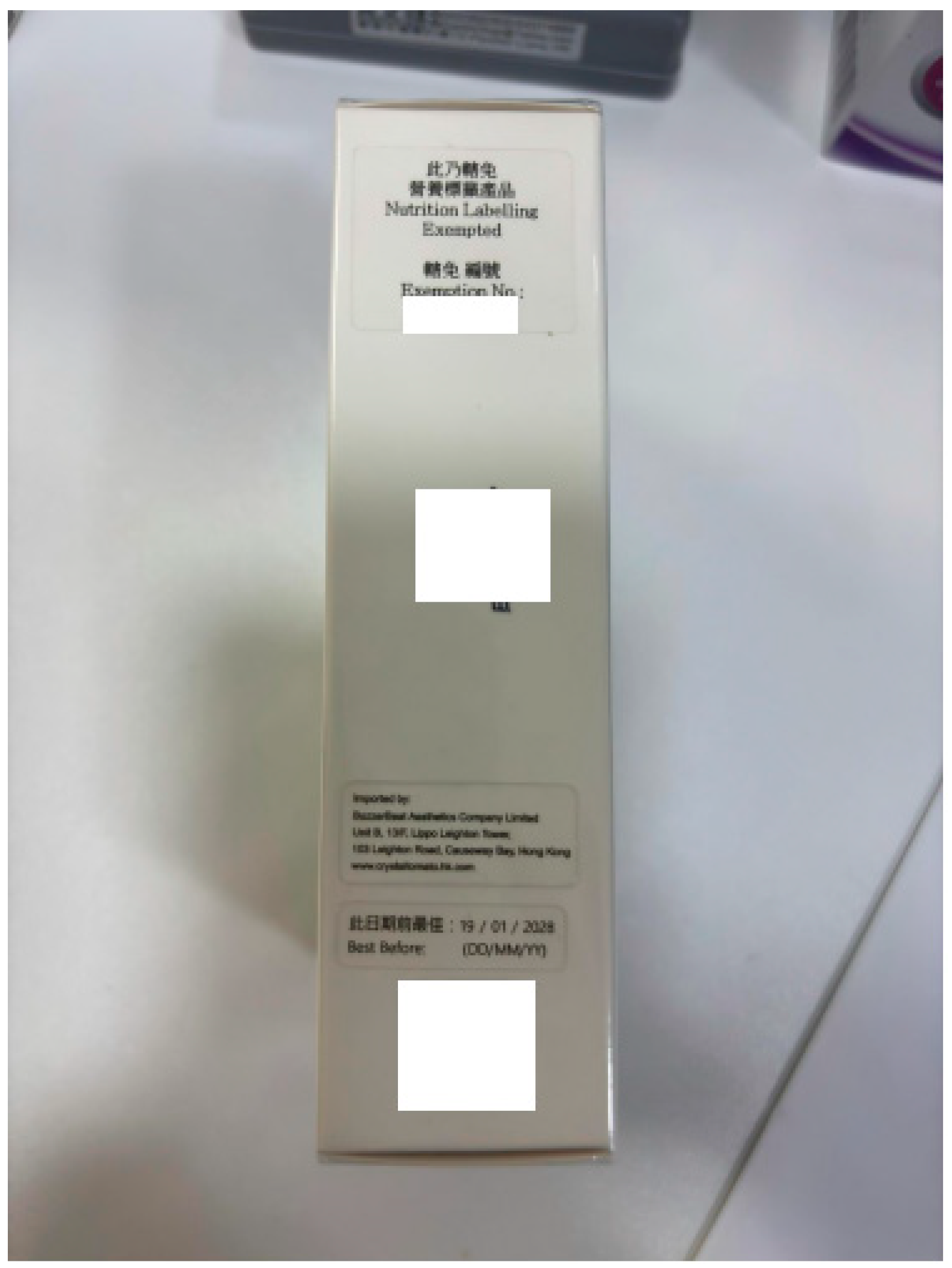
A 35-year-old woman presented with a one-month history of asymptomatic orange-yellow discoloration affecting both palms and soles. She described the color change as gradual in onset and becoming clearly noticeable after taking an over-the-counter anti-tanning supplement, the over the counter colourless carotenoid pills [Figure 1 and Figure 2], for approximately one month. The pigmentation was not associated with pruritus, pain, burning sensation, scaling, or preceding rash. She had not experienced fever, malaise, weight loss, anorexia, abdominal pain, dark urine, or constitutional symptoms. There was no preceding trauma or occupational contact exposure to dyes or chemicals.
Figure 1.
The over the counter colourless carotenoid pills.
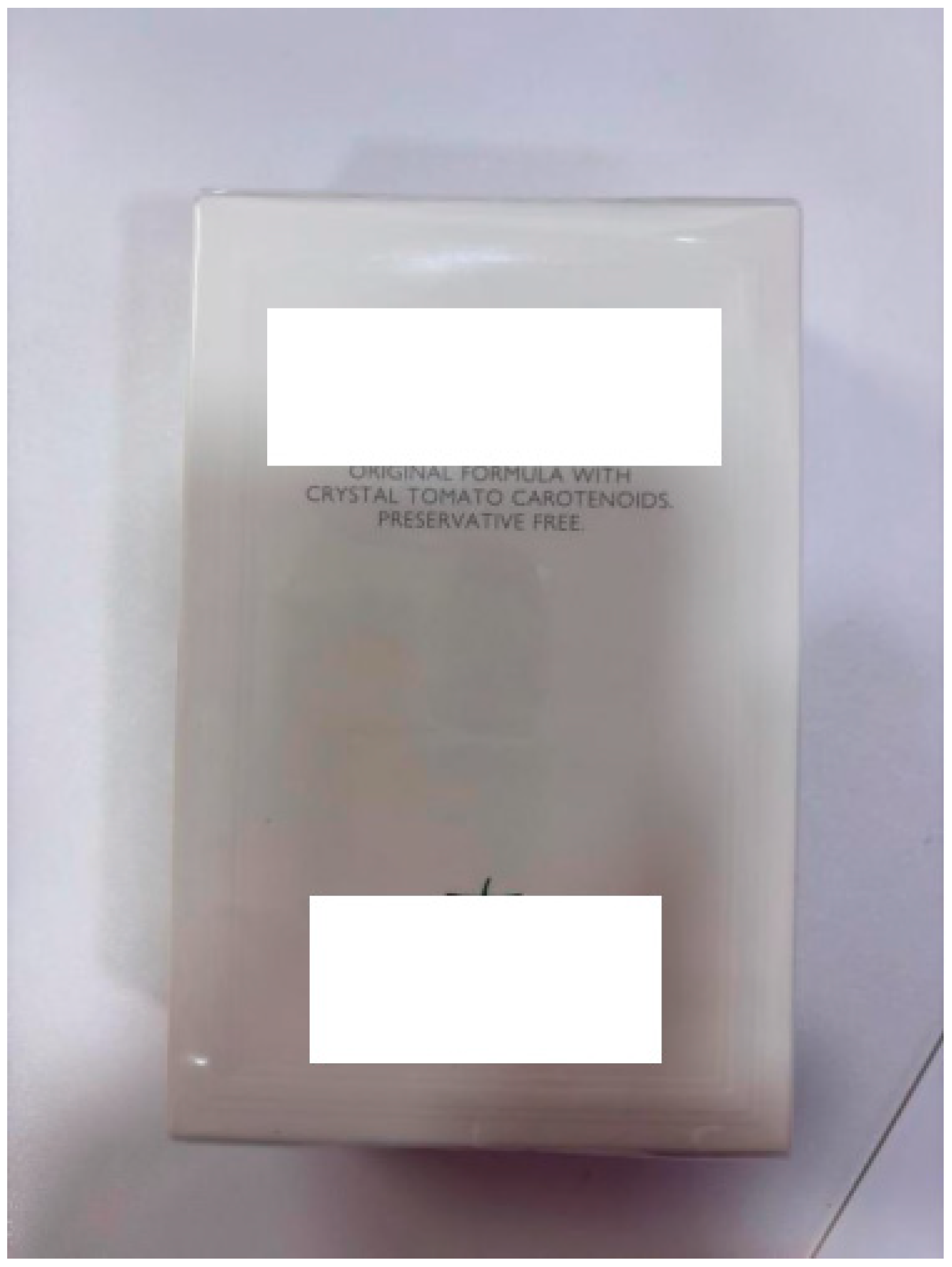
Figure 2.
The over the counter colourless carotenoid pills.
Her past medical history was unremarkable. She had no known drug allergies, was a non-smoker, and reported social alcohol consumption only. She worked as a clinic therapist. She denied excessive ingestion of carotene-rich foods, juices, or supplements. Specifically, she stated that she consumed one market-sized tomato once weekly and did not habitually take carrots, carrot juice, mixed vegetable juices, or high-dose vitamin supplements. The only other self-administered supplement was melatonin, taken occasionally at a standard over-the-counter dose of one tablet at night as needed.
In addition to the skin discoloration, the patient complained of bilateral eye floaters and dry eyes that had developed during the same one-month period after initiating the over the counter colourless carotenoid pills. She denied eye pain, photophobia, reduction in visual acuity, field loss, flashes, or diplopia. There was no prior ophthalmic history of note. The temporal relationship between commencement of the anti-tanning pills and the onset of both cutaneous and ocular symptoms raised suspicion of a supplement-related adverse effect.
According to the product packaging, the over the counter colourless carotenoid pills claimed to contain “colorless carotenoids,” described as white tomato-derived carotenoids that, unlike beta-carotene or lycopene, would not be expected to cause yellow-orange discoloration of the skin. The product also emphasized that carotenoids are generally recognized as safe and that visible carotenoid-associated skin pigmentation is unlikely with this formulation. The patient had used the supplement for cosmetic purposes and had obtained it over the counter without medical supervision.
2.2. Physical Examination
On presentation, the patient appeared comfortable and systemically well. Her general condition was good. Body temperature was 37 °C, and blood pressure was 120/80 mmHg. There was no pallor, jaundice, cyanosis, or clubbing. Examination of the chest was unremarkable, with clear breath sounds bilaterally. Abdominal examination demonstrated a soft, non-tender abdomen without hepatomegaly, splenomegaly, or ascites.
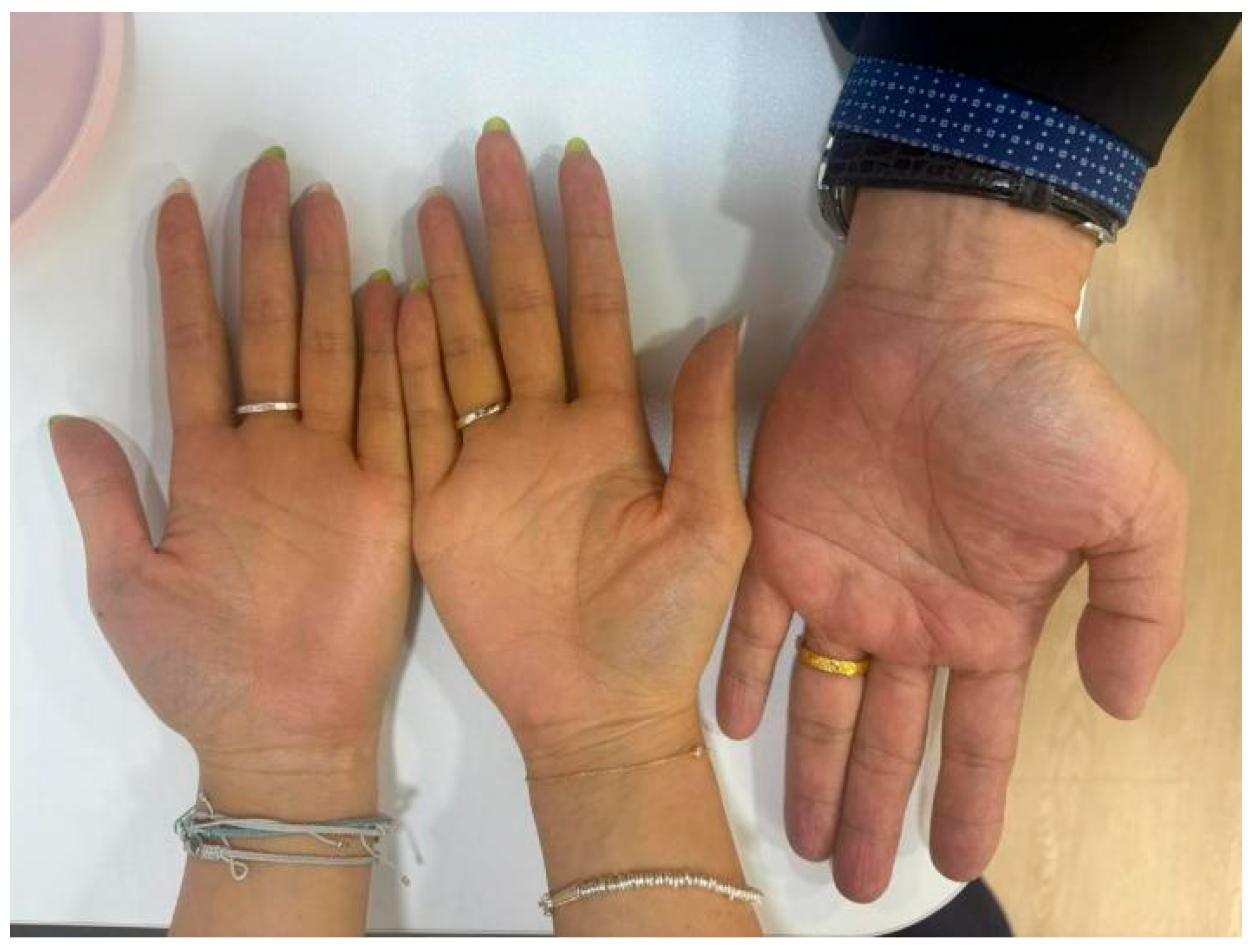
Cutaneous examination revealed distinct orange-yellow discoloration involving both palms and both soles. The discoloration was symmetrical and most marked over the thicker keratinized areas. The degree of pigmentation was clinically significant and readily appreciable on inspection. No erythema, scaling, vesiculation, lichenification, or tenderness was present [Figure 3, Figure 4, Figure 5 and Figure 6]. There were no abnormalities over the face, extensor surfaces, or tendons, and the sclerae were white without icterus. The absence of scleral discoloration was an important clinical feature arguing against jaundice and supporting the diagnosis of carotenoderma.
Figure 3.
Bilateral palms of Case 1, showing the yellow discoloration.
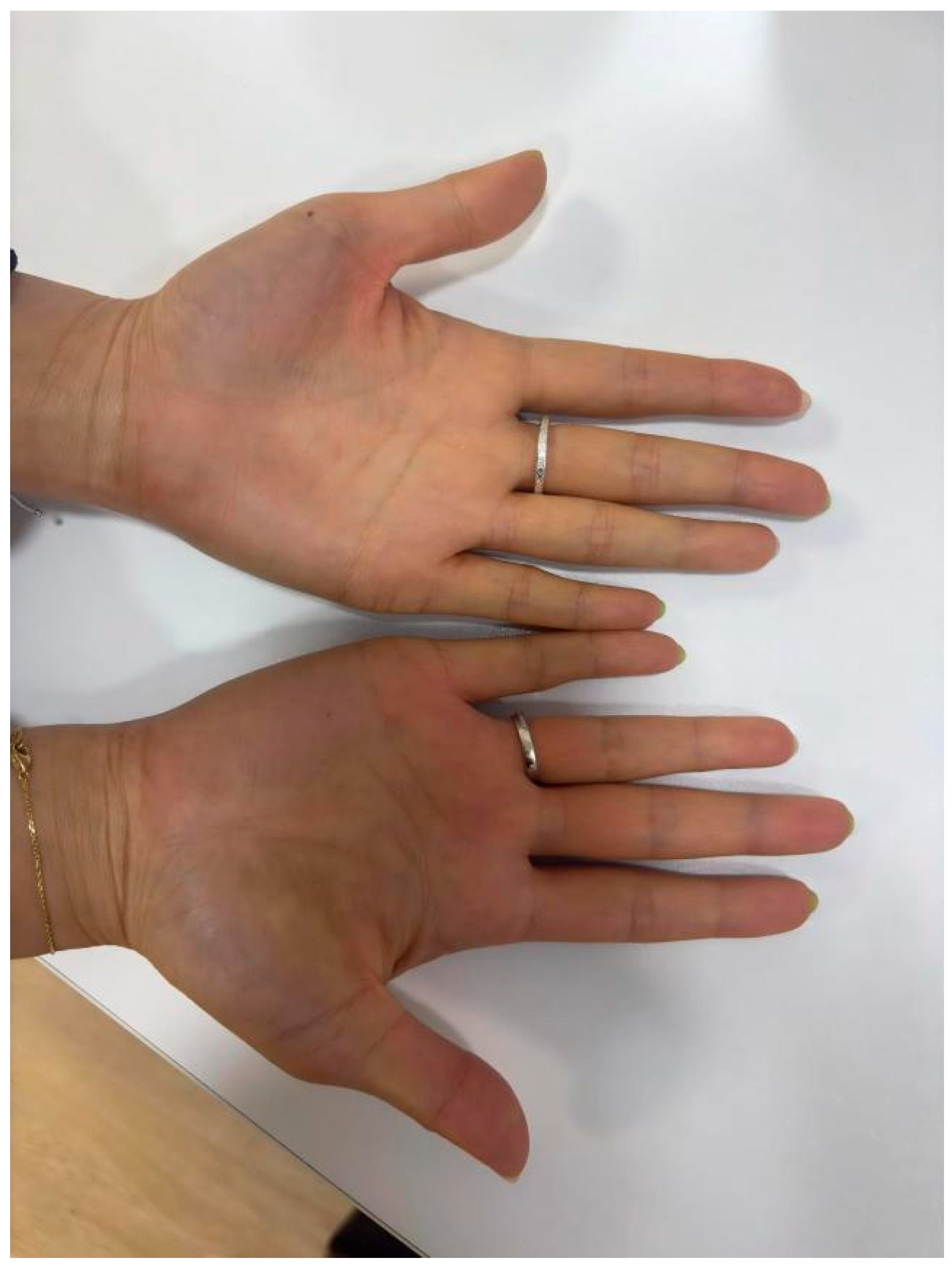
Figure 4.
Bilateral soles of Case 1, showing the yellow discoloration.
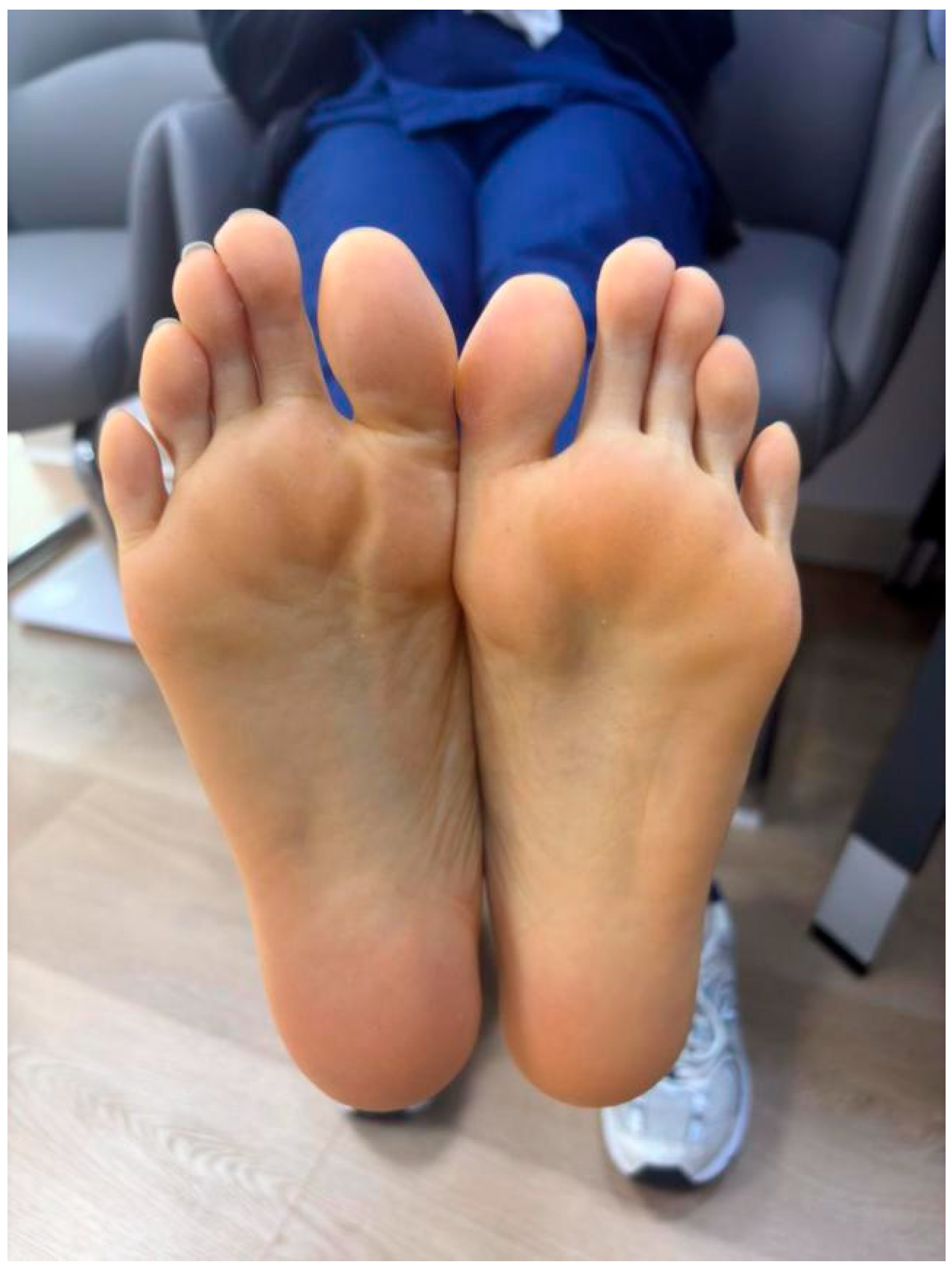
Figure 5.
Right sole of Case 1, showing significant yellow discoloration. The left sole seen on the right side of the photo is the left sole of the clinician.
Figure 5.
Right sole of Case 1, showing significant yellow discoloration. The left sole seen on the right side of the photo is the left sole of the clinician.
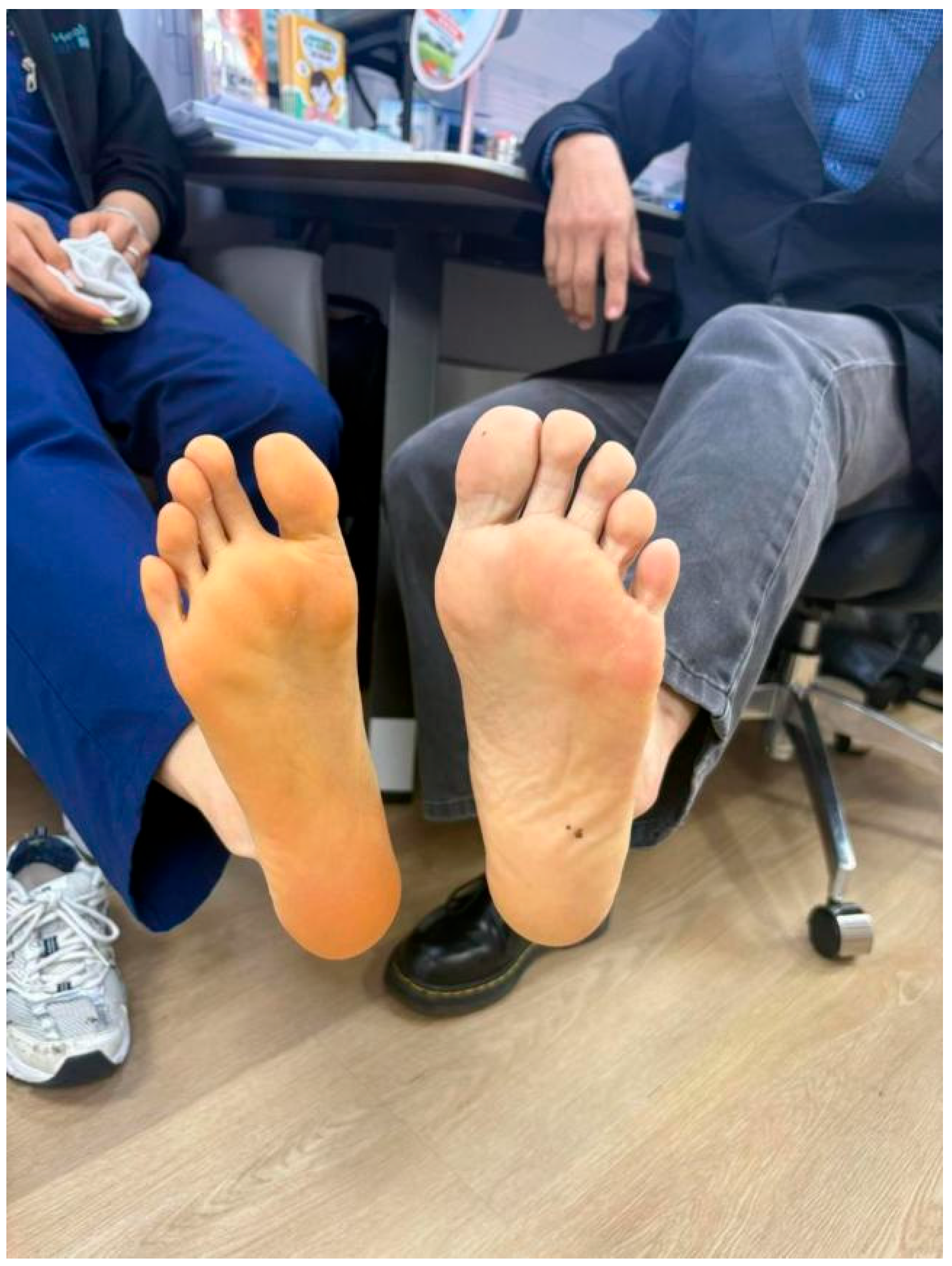
Figure 6.
Bilateral palms of Case 1, showing significant yellow discoloration. The left hand seen on the right side of the photo is the left hand of the clinician.
Figure 6.
Bilateral palms of Case 1, showing significant yellow discoloration. The left hand seen on the right side of the photo is the left hand of the clinician.
Ocular screening at presentation showed visual acuity of 20/20 in both eyes and normal visual fields. The retina had not yet been examined, and slit-lamp or dilated fundus evaluation was not performed at the initial clinic visit. Given the patient’s report of bilateral floaters and dry eyes, as well as the known association between certain carotenoid tanning agents and retinal crystal deposition, ophthalmologic assessment was considered necessary despite preserved bedside vision.
2.3. Clinical Diagnosis
Based on the characteristic distribution of yellow-orange pigmentation on the palms and soles, the sparing of the sclerae and mucous membranes, the absence of systemic illness, and the clear temporal relationship with ingestion of a carotenoid-containing anti-tanning supplement, a clinical diagnosis of supplement-associated carotenoderma was made. The diagnosis was favored over jaundice, as jaundice typically affects the sclerae and is associated with bilirubin elevation rather than isolated palmoplantar pigmentation. Diet-induced or supplement-induced carotenoderma is widely recognized as a clinical diagnosis, and laboratory confirmation is not always required when the history and examination are typical.
The possibility of lycopenemia was considered less likely because the patient consumed tomatoes only infrequently and denied excessive intake of tomato-rich products. Other secondary causes of carotenoderma, including diabetes mellitus, hypothyroidism, liver disease, kidney disease, and eating disorders, were considered in the differential diagnosis, although there were no suggestive symptoms in the history and no supportive findings on clinical examination. Nonetheless, these conditions remain important considerations, particularly when pigmentation appears disproportionate to dietary exposure.
The ocular complaints raised an additional diagnostic question. Classic canthaxanthin retinopathy has been described in association with tanning agents and is characterized by retinal crystalline deposits, sometimes accompanied by visual symptoms. However, the over the counter colourless carotenoid pills is marketed as containing phytoene and phytofluene rather than canthaxanthin, and the current literature does not establish that such colorless carotenoids produce the same retinal toxicity profile. For this reason, the working impression was not confirmed retinopathy but rather ocular symptoms temporally associated with supplement use, requiring specialist exclusion of retinal pathology.
2.4. Management and Follow Up Plan
The patient was advised to stop the over the counter colourless carotenoid pills immediately. This recommendation was based on the likely causal association between supplement exposure and skin discoloration, as well as the uncertainty surrounding her ocular symptoms. She was counseled that carotenoderma is generally benign and reversible, but that normalization of skin color may take several months because carotenoids accumulate in tissues and are cleared gradually. A time frame of approximately three months for visible improvement was discussed as a practical expectation, while acknowledging individual variability.
The management plan included liver function testing in order to exclude hepatic disease and to help distinguish benign pigment deposition from hepatobiliary causes of yellow discoloration. Although her clinical presentation was not suggestive of jaundice, targeted laboratory assessment was considered prudent in view of the unusual supplement history. Reporting the case to the Hong Kong Poison Information Centre was planned to support pharmacovigilance and document a possible adverse effect of an over-the-counter cosmetic supplement.
Because of the complaint of bilateral floaters and dry eyes, referral to an eye specialist was arranged to assess for retinal or other ocular abnormalities. In particular, a dilated fundus examination was considered important to exclude crystalline retinopathy or other pathology. Follow-up was planned in one to two weeks for reassessment and review of investigation results, with longer-term monitoring of cutaneous improvement over the subsequent months.
3. Discussion
3.1. Overview of Carotenoderma
Carotenoderma is a well-recognized but often underappreciated benign dyschromia caused by excess carotenoid deposition in the skin. The yellow-orange hue is most noticeable in the palms and soles because carotene accumulates in the lipid-rich stratum corneum and is accentuated in areas where the horny layer is thick. The forehead, nose, and nasolabial folds may also be involved. Sparing of the sclerae and mucous membranes is a classic and clinically useful sign that distinguishes the condition from jaundice [11].
The majority of cases are associated with excessive intake of carotenoid-rich foods or supplements. In one educational case report, a patient developed carotenemia after heavy consumption of papaya and mango, and the authors emphasized that the diagnosis was clinical, benign, and treatable by dietary reduction alone. Such reports reinforce that recognition of the pattern can prevent unnecessary testing and patient anxiety [12].
3.2. Differential Diagnosis
The principal differential diagnosis in this patient was jaundice. Jaundice typically produces yellow discoloration of the sclerae because bilirubin deposits in elastin-rich tissues [13], whereas carotenoderma spares the sclerae and oral mucosa. In the present case, the sclerae were normal, the patient was systemically well, and there were no symptoms suggestive of hepatobiliary disease. These findings strongly favored carotenoderma over jaundice.
Other differentials include lycopenemia [14], chemical staining [15], medication-related pigmentation [16,17], fake tan [18], and metabolic disorders associated with altered carotene handling [19]. The literature identifies hypothyroidism, diabetes mellitus, liver disease, kidney disease, anorexia nervosa, and certain inborn metabolic errors as conditions that may predispose to carotenemia even without extreme dietary intake [20,21]. Therefore, where the history is atypical or the pigmentation is persistent, clinicians should consider whether an underlying metabolic abnormality may be contributing.
3.3. Over the Counter Colourless Carotenoid Pills and “Colorless Carotenoids”
A notable feature of this case is the implicated product itself. The over the counter colourless carotenoid pills is marketed as containing “colorless carotenoids,” generally understood to refer to phytoene and phytofluene derived from white tomatoes. Preliminary studies of tomato powder rich in phytoene and phytofluene have suggested photoprotective benefits and improved skin quality at doses around 5 mg daily over 12 weeks, without significant measured changes in skin color parameters [22]. These findings have been used to support the claim that such carotenoids do not visibly pigment the skin in the way that beta-carotene or lycopene may do [23].
However, absence of pigmentary change in a small controlled study does not exclude the possibility of visible discoloration in broader real-world use. Product formulations may differ, actual carotenoid content may vary, concomitant ingredients may contribute, and individual absorption, metabolism, or tissue deposition may not be uniform. Moreover, patients may interpret “unlikely” as “impossible,” delaying recognition of supplement-associated adverse effects. The present case therefore serves as a cautionary reminder that cosmetic nutraceuticals should not be assumed risk-free simply because they are marketed as natural or colorless.
3.4. Ocular Symptoms and the Question of Retinal Toxicity
The patient’s complaint of bilateral floaters and dry eyes introduced an important clinical concern. Although there is no clear evidence from the available literature that phytoene- or phytofluene-based supplements cause crystalline retinopathy, carotenoid-related ocular toxicity is not unprecedented [24]. Canthaxanthin, a carotenoid previously used in tanning preparations, has been associated with retinal crystal deposition and, less commonly, significant visual loss [25].
For the present patient, it would be inappropriate to conclude that she had canthaxanthin retinopathy, because the product reportedly contained different carotenoids and no retinal examination had yet been performed. Nevertheless, her symptoms justified prompt ophthalmologic review. From a practical clinical standpoint, any patient taking carotenoid-containing tanning or skin-brightening products who reports new visual symptoms should undergo specialist assessment rather than reassurance alone. This is particularly important because early ocular toxicity may not be detectable by bedside acuity testing.
3.5. Clinical Implications
This case carries several practical lessons. First, a supplement history is essential in the assessment of yellow-orange skin discoloration. Many patients do not regard beauty supplements, anti-tanning pills, or nutraceuticals as medications and may omit them unless specifically asked. Second, the localization of pigmentation to the palms and soles with scleral sparing remains a powerful bedside clue to carotenoderma. Third, while most cases are benign and self-limiting, clinicians should remain alert to secondary causes and associated systemic disorders when the presentation is atypical. Finally, adverse events related to over-the-counter skin supplements may be underrecognized and underreported, emphasizing the value of toxicology center reporting and case publication.
3.6. Prognosis
The prognosis of dietary or supplement-associated carotenoderma is generally excellent. After cessation of the causative exposure, skin color gradually returns to normal over a period of weeks to months, depending on body stores and ongoing intake. Patient reassurance is therefore an important part of management. In the present case, a return toward normal skin color was expected over approximately three months, provided the supplement was fully discontinued and no other carotenoid source or metabolic contributor was present.
4. Conclusions
This case report describes a 35-year-old woman who developed clinically evident palmoplantar carotenoderma after one month of over the counter colourless carotenoid pills ingestion. The presentation was typical in distribution and distinguished from jaundice by complete sparing of the sclerae and the absence of systemic features. Despite the product’s claim that its “colorless carotenoids” should not cause visible pigmentation, the close temporal relationship and lack of alternative dietary explanation strongly suggested supplement-associated carotenoderma.
The case is additionally notable for concurrent eye floaters and dry eyes, symptoms that prompted ophthalmology referral to exclude retinal toxicity. Although canthaxanthin retinopathy is a recognized phenomenon in tanning-related carotenoid exposure, it remains uncertain whether similar ocular risk exists with white tomato carotenoid supplements. This uncertainty highlights the importance of caution, detailed documentation, and post-marketing surveillance.
In summary, clinicians should consider over-the-counter cosmetic supplements in the differential diagnosis of yellow-orange skin discoloration, especially when the palms and soles are involved and the sclerae are spared. Recognition of this benign but distinctive condition can prevent misdiagnosis, avoid unnecessary alarm, and facilitate appropriate counseling, cessation of the offending supplement, and targeted follow-up.
Author Contributions
All authors have reviewed and approved the article for submission. Conceptualization, K.H.S., K.W.A.L., K.W.L.C. and C.H.L. Writing-Originial Draft Preparation, K.W.A.L., K.W.L.C. and C.H.L. Writing-Review and Editing, K.W.A.L., K.W.L.C. and C.H.L. Visualization, K.W.A.L., K.W.L.C. and C.H.L. Supervision, K.H.S. All authors have read and agreed to the published version of the manuscript.
Funding
This research received no external funding.
Data Availability Statement
Data are available by contacting the corresponding author.
Conflicts of Interest
I acknowledge that I have considered the conflict of interest statement included in the Author Guidelines. I hearby certify that, to the best of my knowledge, no aspect of my current personal or professional situation might reasonably be expected to significantly affect my views on the subject I am presenting.
References
- Tanaka, A.; Miyauchi, T.; Kitamura, S.; Iwata, H.; Hata, H.; Ujiie, H. Carotenoderma due to lycopenemia: A case report and evaluation of lycopene deposition in the skin. J. Dermatol. 2022, 49(12), 1320–1324. [Google Scholar] [CrossRef] [PubMed]
- Priyadarshani, A.M. Insights of hypercarotenaemia: A brief review. Clin. Nutr. ESPEN 2018, 23, 19–24. [Google Scholar] [CrossRef]
- Kapsetaki, M.E. Diet-induced carotenodermia: A literature review. Int. J. Dermatol. 2024, 63(2), 161–168. [Google Scholar] [CrossRef]
- Palaha, H.K.; Priya, P.M.; Puranik, P.; Reddy, V.S.; Bhadran, A.; Majjagi, V.K. Diagnostic confusion caused by excess beta-carotene: A case of primary carotenemia. MGM J. Med. Sci. 2025, 12(2), 394–397. [Google Scholar] [CrossRef] [PubMed]
- Mayne, S.T. Beta-carotene, carotenoids, and disease prevention in humans. FASEB J. 1996, 10(7), 690–701. [Google Scholar] [CrossRef]
- De Cerqueira, A.M.; Cardoso, F.D. Nutritional diseases. In Tropical Dermatology e-Book; Elsevier: Amsterdam, The Netherlands, 2016; p. 407. [Google Scholar]
- Martini, D.; Negrini, L.; Marino, M.; Riso, P.; Del Bo, C.; Porrini, M. What is the current direction of the research on carotenoids and human health? An overview of registered clinical trials. Nutrients 2022, 14(6), 1191. [Google Scholar] [CrossRef]
- Tarshish, E.; Hermoni, K. Beauty from within: Improvement of skin health and appearance with Lycomato a tomato-derived oral supplement. J. Cosmet. Dermatol. 2023, 22(6), 1786–1798. [Google Scholar] [CrossRef]
- Meléndez-Martínez, A.J.; Mapelli-Brahm, P.; Benítez-González, A.; Stinco, C.M. A comprehensive review on the colorless carotenoids phytoene and phytofluene. Arch. Biochem. Biophys. 2015, 572, 188–200. [Google Scholar] [CrossRef] [PubMed]
- So, B.; Kwon, K.H. Nutritional approaches of the changing consumer after the pandemic: Sustainable potential of phytoene and phytofluene for photoprotection and skin health. Sustainability 2023, 15(5), 4416. [Google Scholar] [CrossRef]
- Weidman, F.D. The Pathology of the Yellowing Dermatoses: I. Nonxanthomatous (Jaundice, Carotinemia, Blood Pigmentation, Melanin, Colloid Degeneration and Elastic Degeneration). Arch. Dermatol. Syphilol. 1931, 24(6), 954–991. [Google Scholar] [CrossRef]
- Abdul-Kadir, H.N.; Tawfik, K.M. A Case of Carotenemia in an Adult Male in UK Primary Care Setting. Multi-Knowl. Electron. Compr. J. Educ. Sci. Publ. MECSJ 2024, (78), 1–29. [Google Scholar]
- Patel, R.; Nair, S.; Choudhry, H.; Jaffry, M.; Dastjerdi, M. Ocular manifestations of liver disease: An important diagnostic aid. Int. Ophthalmol. 2024, 44(1), 177. [Google Scholar] [CrossRef]
- Logan, I.T.; Logan, R.A. The color of skin: Yellow diseases of the skin, nails, and mucosa. Clin. Dermatol. 2019, 37(5), 580–590. [Google Scholar] [CrossRef]
- Ogura, Y.; Kuwahara, T.; Akiyama, M.; Tajima, S.; Hattori, K.; Okamoto, K.; Okawa, S.; Yamada, Y.; Tagami, H.; Takahashi, M.; Hirao, T. Dermal carbonyl modification is related to the yellowish color change of photo-aged Japanese facial skin. J. Dermatol. Sci. 2011, 64(1), 45–52. [Google Scholar] [CrossRef] [PubMed]
- del Carmen Mallagray-Montero, M.; Moreno-López, L.A.; Cerero-Lapiedra, R.; Castro-Janeiro, M.; Madrigal-Martínez-Pereda, C. Medication related to pigmentation of oral mucosa. Med. Oral Patol. Oral Cirugía Bucal 2022, 27(3), e230. [Google Scholar] [CrossRef]
- Krasowska, D.; Szymanek, M.; Schwartz, R.A.; Myśliński, W. Cutaneous effects of the most commonly used antidepressant medication, the selective serotonin reuptake inhibitors. J. Am. Acad. Dermatol. 2007, 56(5), 848–853. [Google Scholar] [CrossRef]
- Creed, F. Sunbeds, dihydroxyacetone (DHA) fake tan, and MelanoTan injections: A history of ‘safe’ tanning technologies. In Technology, Health, and the Patient Consumer in the Twentieth Century; Manchester University Press: Manchester, UK, 2025; pp. 167–193. [Google Scholar]
- Iqbal, W.A.; Mendes, I.; Finney, K.; Oxley, A.; Lietz, G. Reduced plasma carotenoids in individuals suffering from metabolic diseases with disturbances in lipid metabolism: A systematic review and meta-analysis of observational studies. Int. J. Food Sci. Nutr. 2021, 72(7), 879–891. [Google Scholar] [CrossRef] [PubMed]
- Awuchi, C.G.; Igwe, V.S.; Amagwula, I.O. Nutritional diseases and nutrient toxicities: A systematic review of the diets and nutrition for prevention and treatment. Int. J. Adv. Acad. Res. 2020, 6(1), 1–46. [Google Scholar] [CrossRef]
- Jen, M.; Yan, A.C. Syndromes associated with nutritional deficiency and excess. Clin. Dermatol. 2010, 28(6), 669–685. [Google Scholar] [CrossRef]
- von Oppen-Bezalel, L.; Fishbein, D.; Havas, F.; Ben-Chitrit, O.; Khaiat, A.J. The photoprotective effects of a food supplement tomato powder rich in phytoene and phytofluene, the colorless carotenoids, a preliminary study. Glob. Dermatol. 2015, 2(4), 178–182. [Google Scholar]
- Zerres, S.; Stahl, W. Carotenoids in human skin. Biochim. Biophys. Acta (BBA)-Mol. Cell Biol. Lipids. 2020, 1865(11), 158588. [Google Scholar] [CrossRef] [PubMed]
- Kim, E.; Fine, H.F.; Ober, M.D. Retinal and Uveal Drug Toxicity. Retinal Physician [Serial Online]. 2008. Available online: https://www.retinalphysician.com/issues/2008/janfeb/retinal-and-uveal-drug-toxicity/ (accessed on 7 June 2026).
- Felix, M.B. Canthaxanthin retinopathy. J. Toxicol. Cutan. Ocul. Toxicol. 1988, 7(3), 223–236. [Google Scholar] [CrossRef]
© 2026 copyright by the authors. This article is an open access article distributed under the terms and conditions of the Creative Commons Attribution (CC BY) license (https://creativecommons.org/licenses/by/4.0/).
